
2025 Golden Finch Award Winners Talk About Birding
Each spring, the Golden Finch Award celebrates the birding tradition of a “Big Year” by looking at the last calendar year and recognizing local birders who identified the most bird species on eBird—within Inyo County and Mono County. The Eastern Sierra Bird Alliance created this award in 2023 to encourage birdwatching while also making valuable contributions to community science.
We announced our impressive 2025 winners in our recent newsletter, as well as the birders who came impressively close! And then we thought…can we learn something from these high-achieving bird finders? We’re pleased that Nancy and Debbie both shared a few of their techniques with us, and what motivates them.
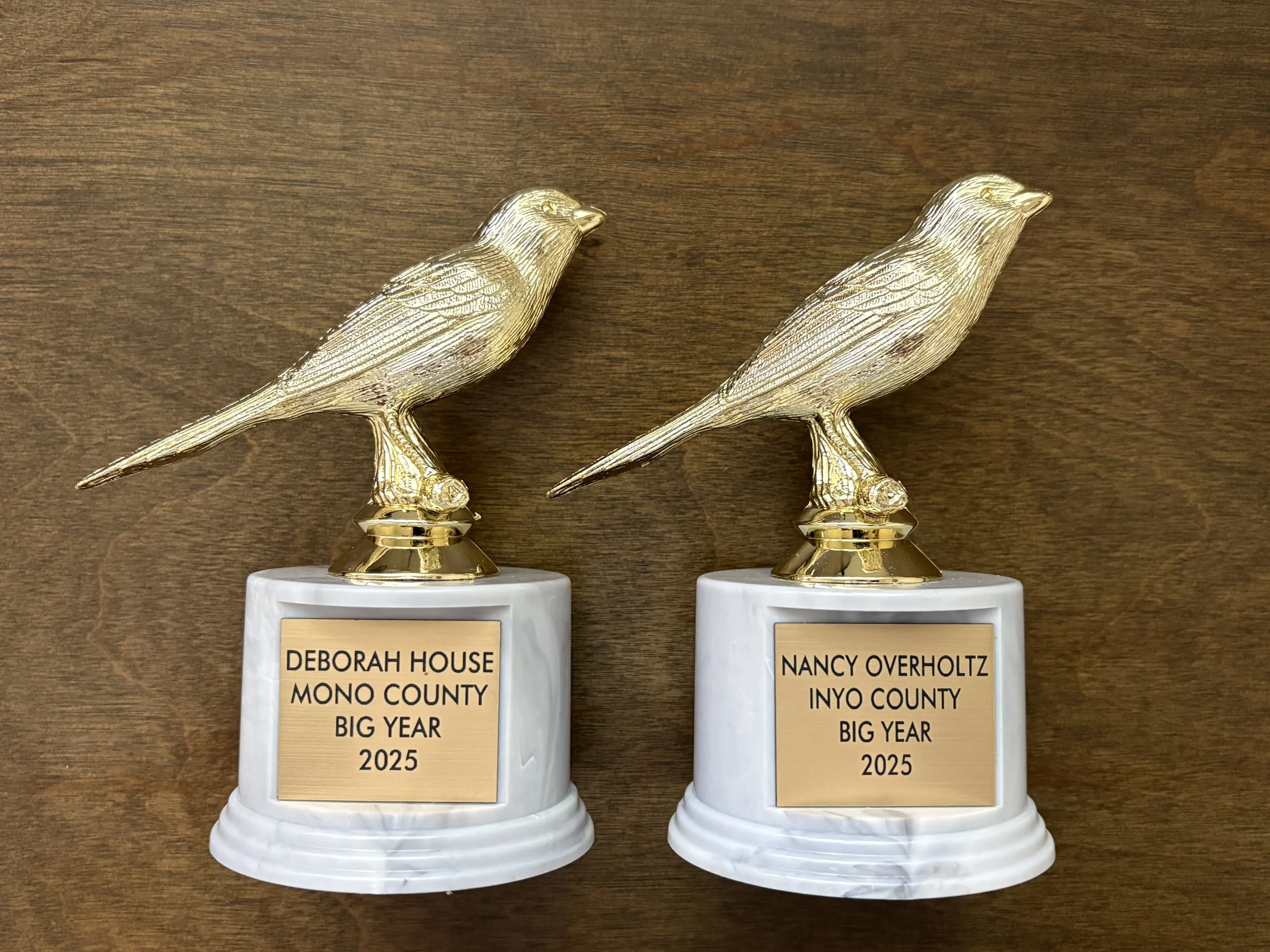
Photo: The 2025 Golden Finch Award trophies.
Golden Finch winners for 2025:
Mono County - Deborah House with 256 birds, topping her 2024 achievement and defending her place as top Mono County eBirder for a third year in a row.
Inyo County - Nancy Overholtz with 301 birds, which is a personal record, and also the most bird species ever recorded on eBird for Inyo County in a year.
Nancy Overholtz
Why look for birds: I started birdwatching because I wanted to paint birds, but the hobby took on a life of its own. Once I started looking at birds through binoculars, I was completely hooked. I love to hear them and watch their behavior.
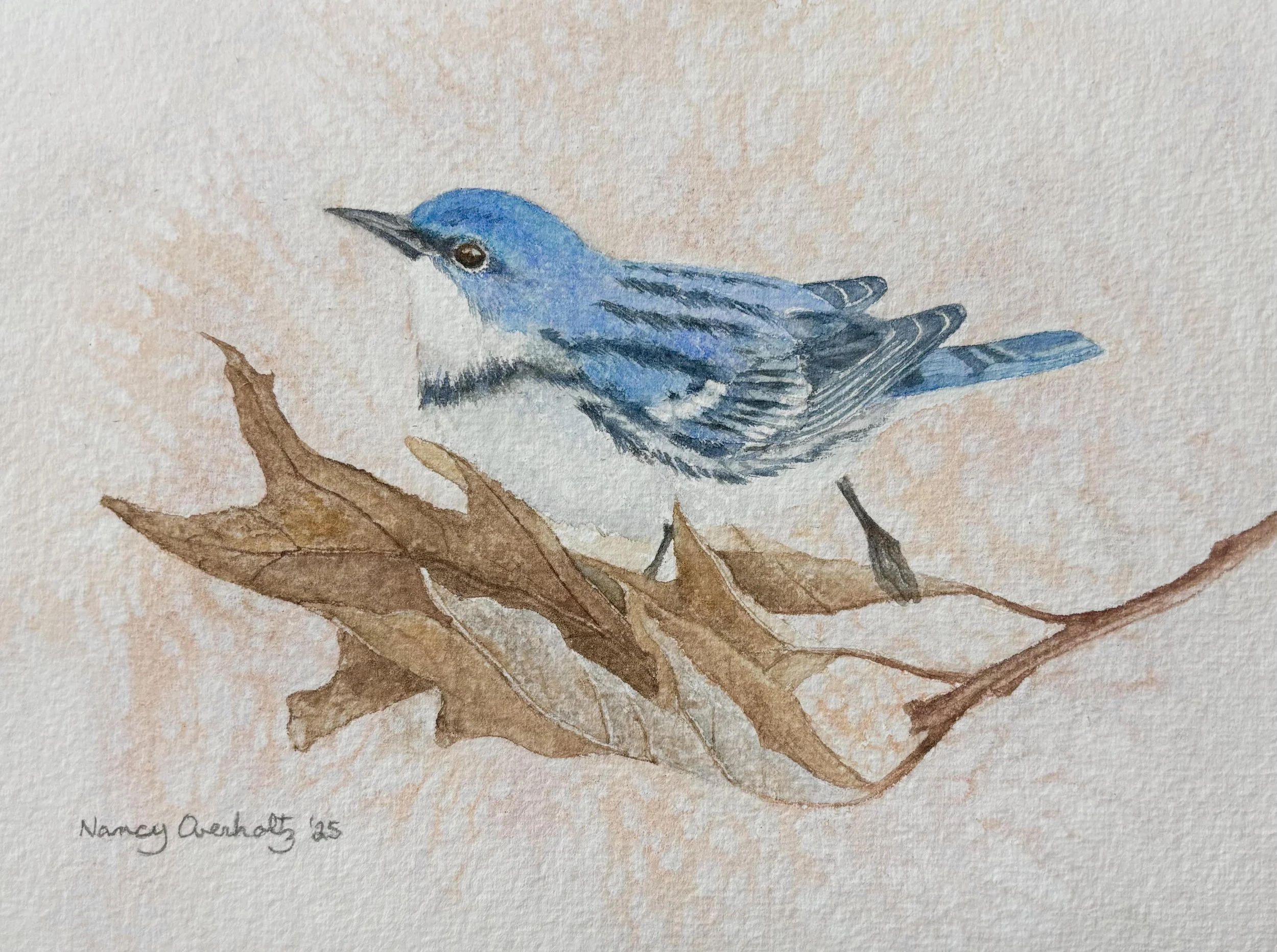
Photo: Nancy Overholtz enjoys painting birds, including this Cerulean Warbler.
How she identifies birds: Sound, visual details, the way they move, what they are eating, and where they are in the tree or on the ground.
Her quest for 300: When you use eBird to keep track of your sightings, you are automatically keeping a year list as well as your life list. Every year, I would get somewhere between 250 and my previous high record of 288 for the county. I really wanted to get to 300 in a year. My late husband told me he didn’t think it was possible so, of course, that made me even more determined.
2025 was a very “good” year for rare birds in Inyo County (While it’s fun for us birders when rare birds show up, it’s probably not good for them. They are lost). I had to make quite a few trips to Furnace Creek where most were showing up.
Just before Christmas, I heard my 300th bird, a Northern Pygmy Owl. I really thought that would be the last and I was very happy to have finally succeeded. On December 27th, I looked out my back window and saw a tanager which is NOT a bird we get in winter. When I got my binoculars on it, I saw that it was a Scarlet Tanager which is very rare here anytime of the year. It stayed for four days quietly eating berries from my Pyracantha.
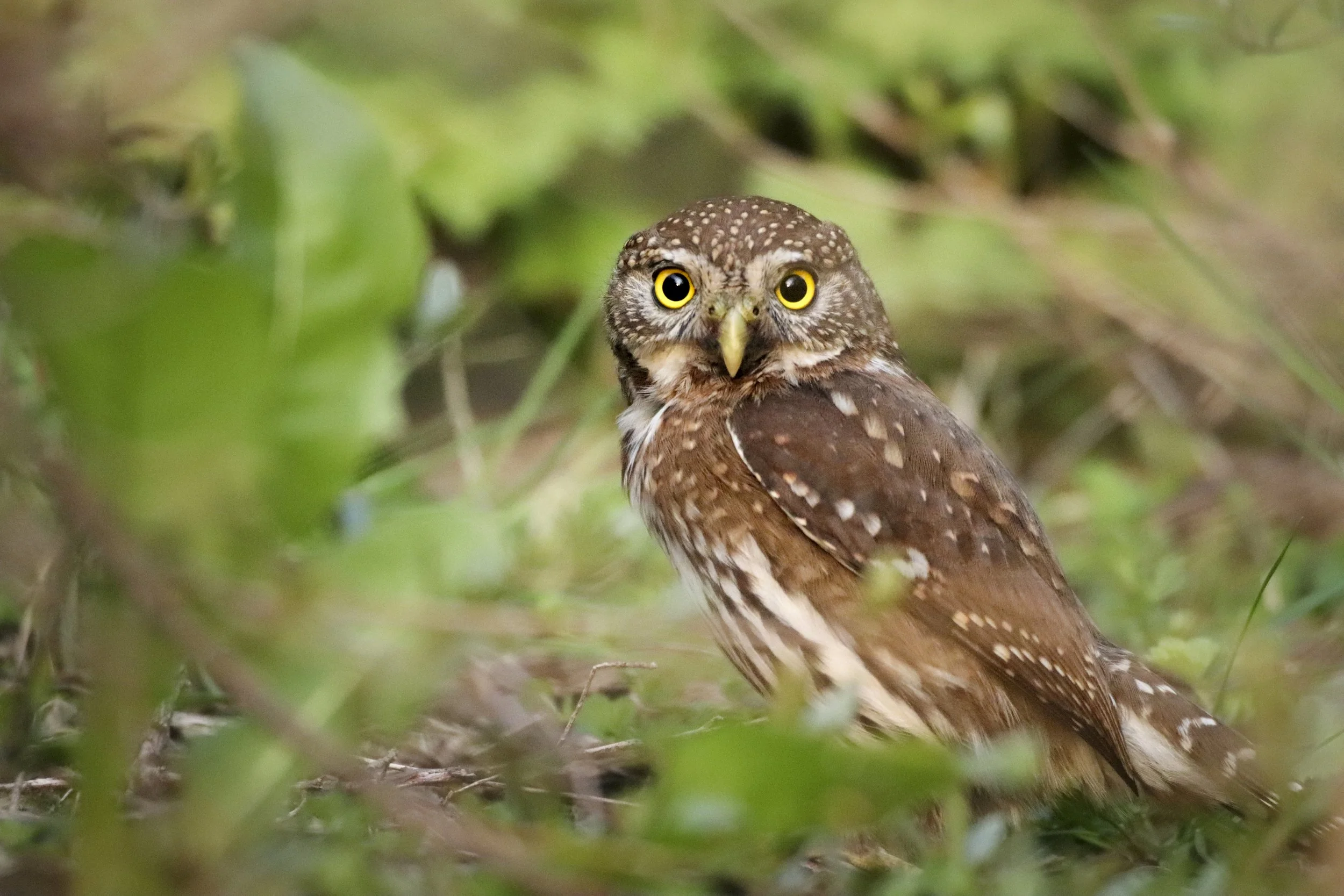
Photo: A Northern Pygmy Owl was Nancy’s 300 th bird. Credit: Sara McCall/Audubon Photography Awards.
Deborah House
How she identifies birds: I am primarily an “aural” birder although shape, size, behavior, habitat, time of year and location all get fed into the decision tree. I didn’t have a “spark bird” so much as a “spark situation” in which a fellow biologist was able to identify a Costa’s Hummingbird in flight based on its call. I said: “I want to be able to do that!” After much study and tracking down every single sound until I figured out what it was (the old-fashioned way!), and years of doing point count surveys, I have come to rely on vocalizations first to find, identify, and key on that bird that is unlike the others.
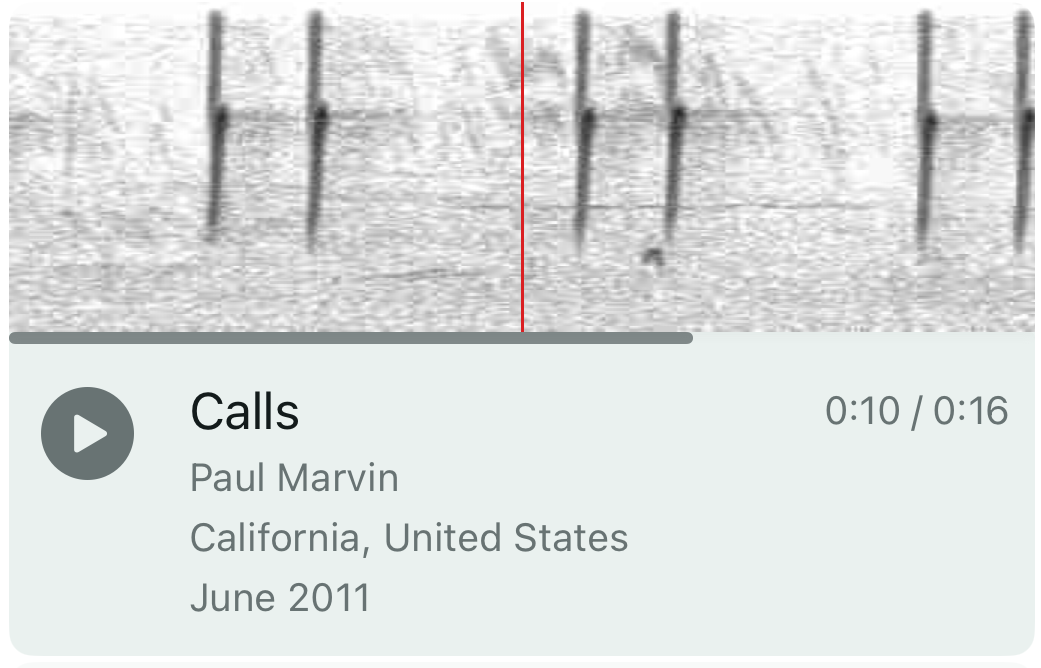
Photo: A Costa’s Hummingbird sparked Debbie’s interest in learning bird vocalizations. Image taken from the Merlin app.
Learning bird vocalizations: When I was just starting to learn, I did two things. I tracked down every sound I heard until I saw who was doing it, or gave up. I had to do this many times in some cases before it stuck. But the auditory plus the visual plus the focused hunt is what really helps things stick for me.
The other thing I did was whenever I was driving, I popped a CD in of bird songs and listened over and over. The more you listen, the more you learn and the more variations the birds seem to come up with, so it doesn’t get boring!
Then I got into recording birds, and the process of standing still and being quiet while recording really makes me listen more intently and appreciate the variability in vocalizations of individuals and species. And now that my eBird lists are going into the California Breeding Atlas, I am trying to sort out and research the various vocalizations of some species to determine if they have specific meaning in the breeding cycle, using the Birds of The World website.
Inspired? Try a Big Day!
Does a Big Year sound too ambitious? How about a Big Day? Global Big Day is a worldwide birding event that happens twice a year during peak migration times, in May and October. For more, see the eBird Global Big Day page and check our calendar for local events!
Good luck to our diligent eBirders in 2026! You’re recording important data about bird life in the Eastern Sierra. And we hope you have fun doing it.
The Eastern Sierra Bird Alliance is a community chapter of the National Audubon Society, representing the diverse habitats of the Eastern Sierra within Inyo and Mono Counties.
Our mission is to educate the public about local bird species and habitats; while working to preserve and protect them for future generations.