
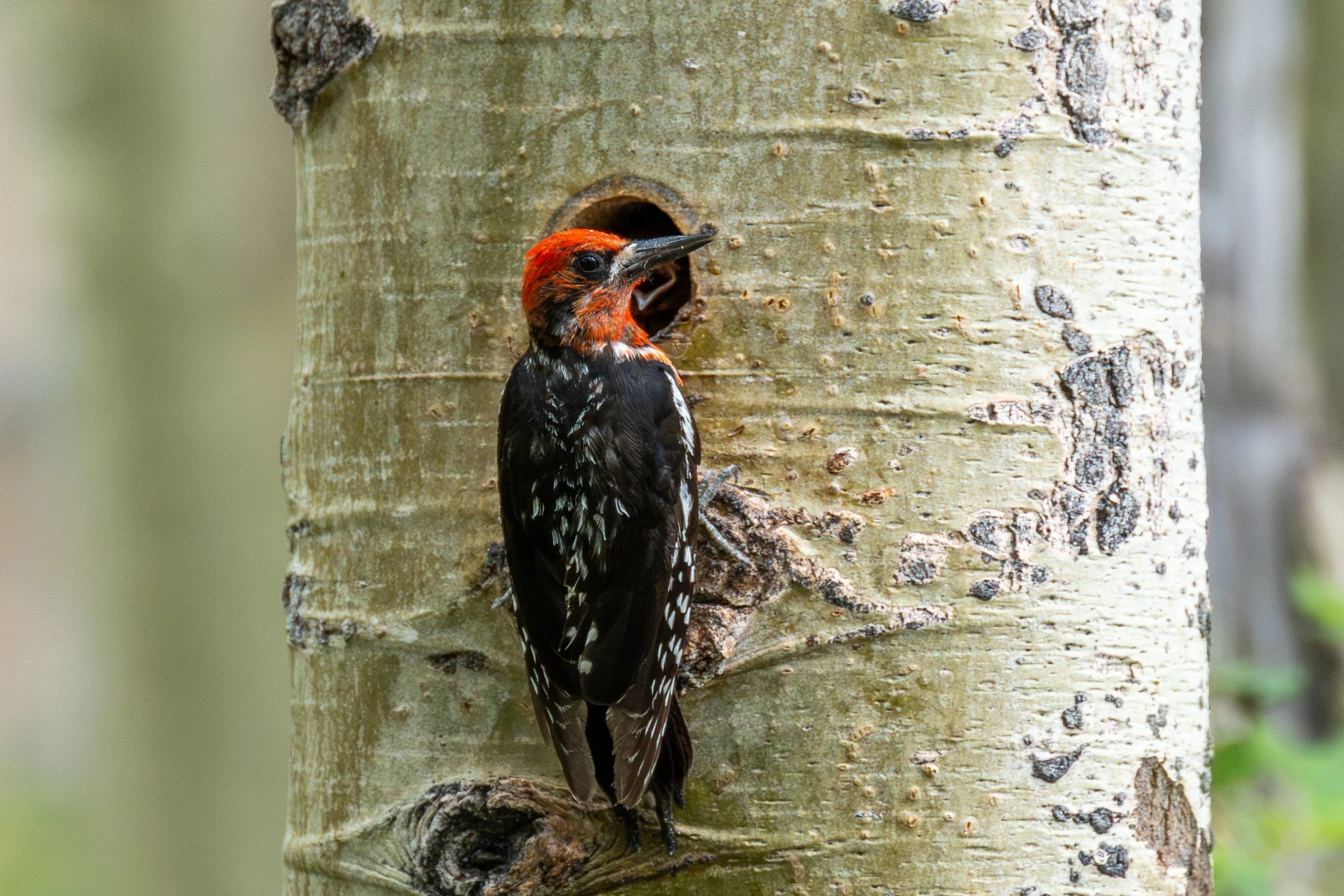
An adult Red-breasted Sapsucker pauses briefly in front of the wide-open gape of a hungry young bird. Photo: Forrest English.
By Forrest English and Sarah Moore
The California Bird Atlas is well into its first year and the checklists are rolling in! The California Bird Atlas (of which Eastern Sierra Bird Alliance is a founding partner) is an effort to understand the status, distribution, and phenology of all birds that breed in California during the 5-year window 2026-2030. This will allow a better understanding of which birds breed when and where throughout the state, and let scientists look at changes throughout time.
California is one of only 6 states that has never completed a statewide breeding bird atlas. Some counties have completed their own atlas projects (15 out of 58 counties in the state), and those counties are overwhelmingly coastal, with a much denser population to draw volunteers from! Neither Mono or Inyo Counties have completed a breeding bird atlas in the past, so this is a unique opportunity.
Volunteer birders are contributing to the Atlas through an eBird project that breaks the state into 3 x 3 mile grid squares called “blocks”. Once eBird users have joined the project, their checklists are submitted via eBird, along with their careful notes about breeding behaviors and evidence for all species they observe on those checklists. Some examples of breeding evidence include singing to mark territory, nests under construction, or parents feeding hungry young birds.
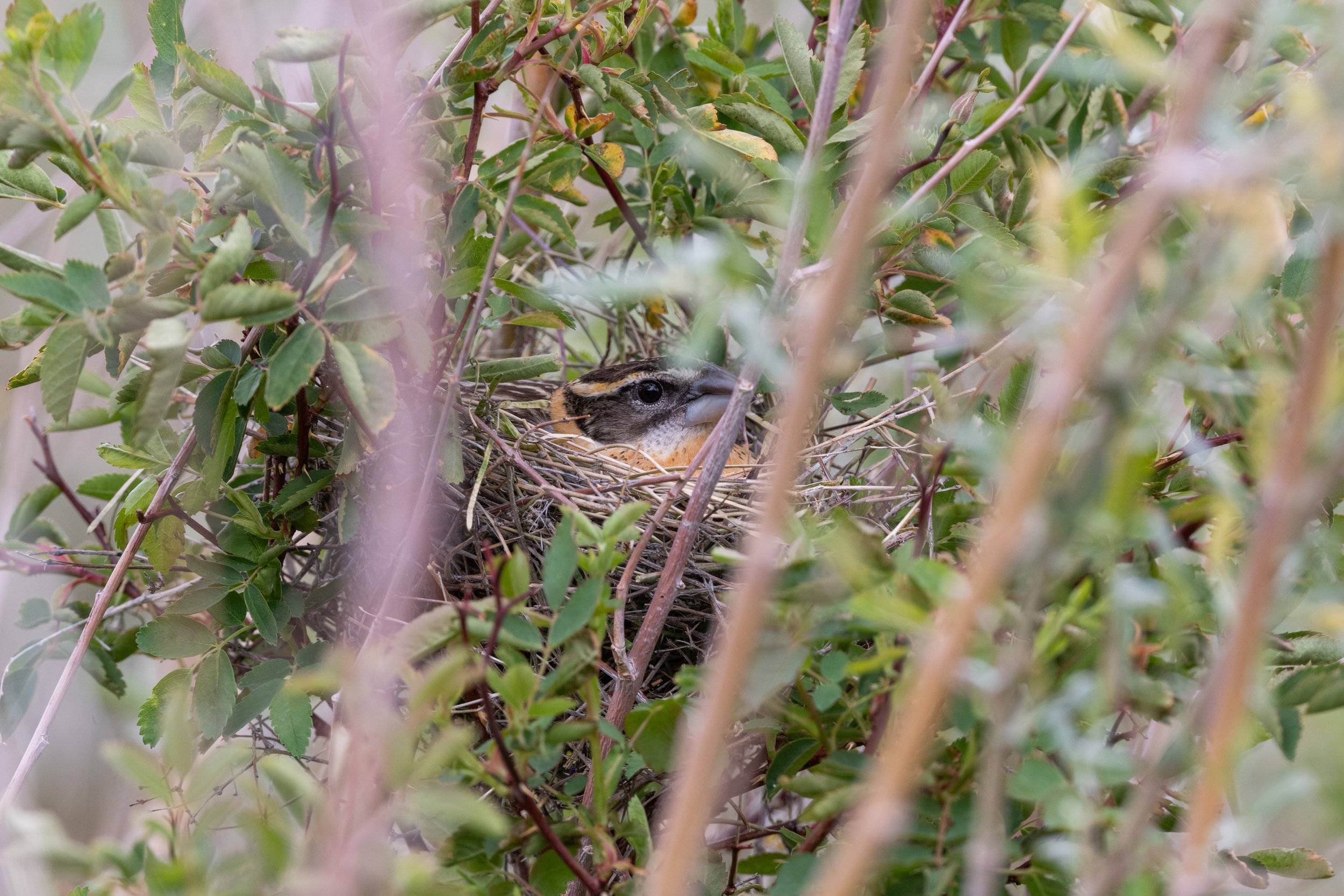
Most birds try very hard to conceal their nests, like this Black-headed Grosbeak. Photo: Forrest English.
The data is still being collected and checked, so we can't report much in the way of species or family trends yet. What we do know is that we need to try to cover as much of our region as possible, even places that aren't "birding spots."
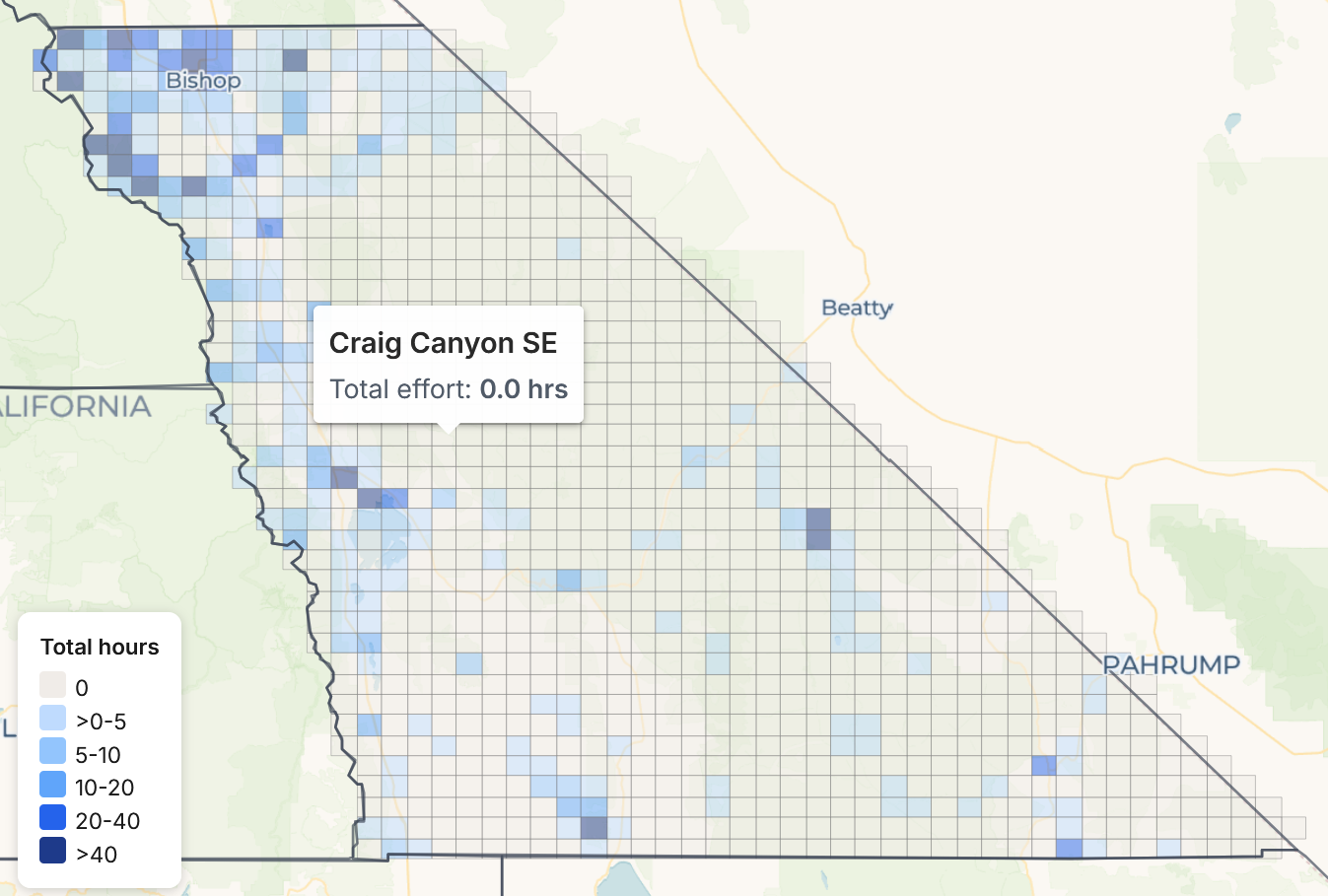
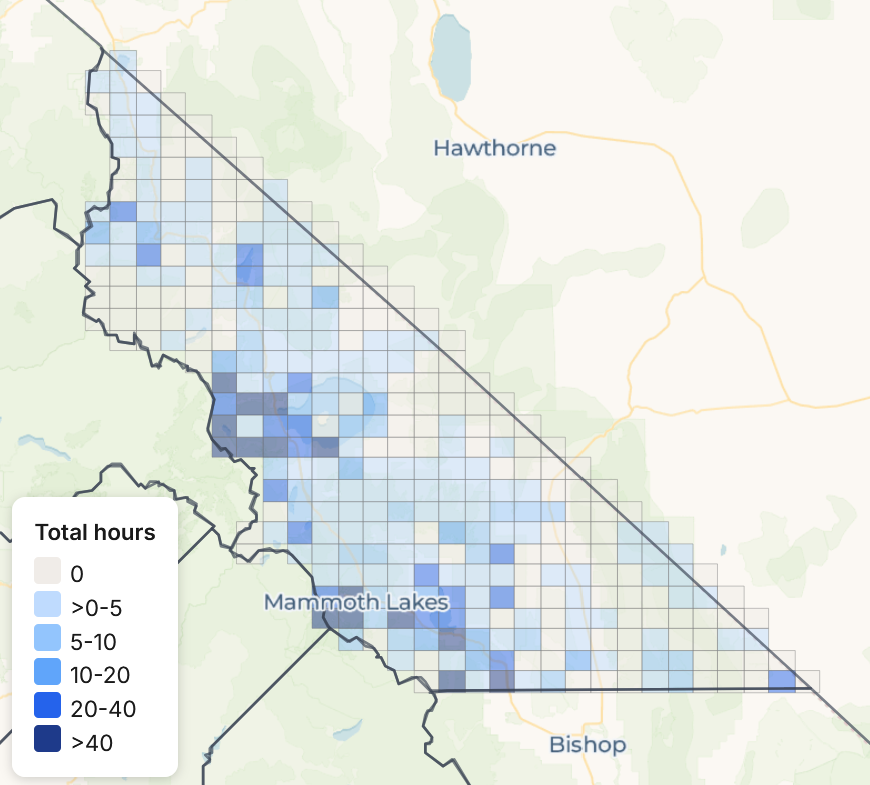
As with any effort of this kind, some blocks are easier to access and/or close to known birding hotspots and are getting really good coverage. Other harder-to-access or just out-of-the-way blocks still have no checklists at all. This phenomenon is especially prevalent in Inyo County, where Bishop, the 395 corridor, and a few spots in Death Valley have some coverage, and everything else is... well... a bit empty. Sheer gigantic acreage and sparse road networks in these in-between areas are working against us. But, if everyone takes a couple of birding trips to a place they wouldn't normally go, we can start to close those gaps! And who knows, you might find something cool and unexpected.
We also need coverage at different times of the year, especially the “off-season.” Fun fact, there are species breeding in California during every single month of the year. Remember that "no data" or an empty checklist is still data! So still submit your checklist, even if there’s nothing (or very little) on it. The effort still counts, and the fact that you didn’t see anything is still really important information. We want to know where birds are, of course, but we also want to know where (or when) they aren't.
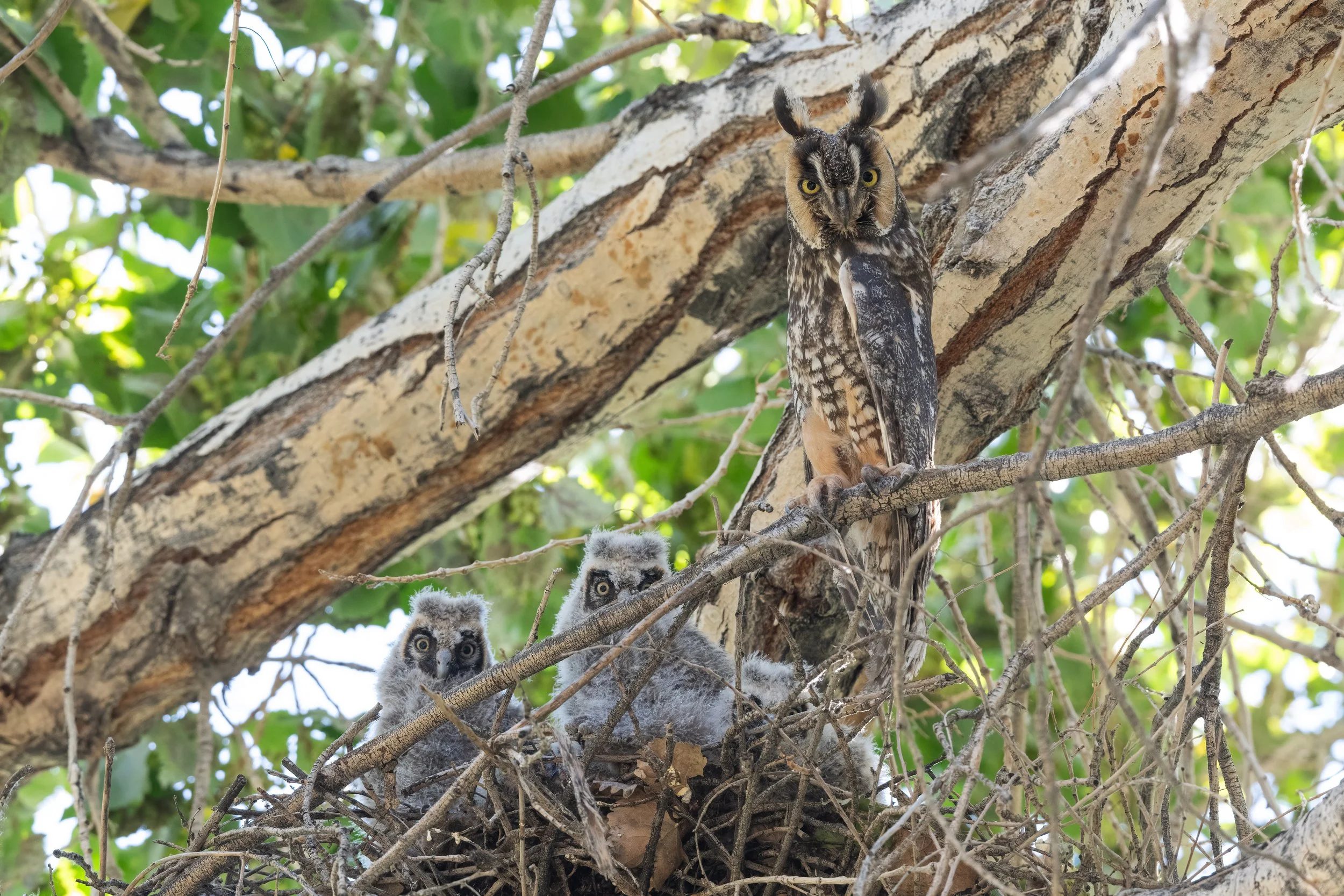
Long-eared Owls stare back at a birder in Inyo County. Photo: Forrest English.
Another area that needs more love is nocturnal birding! Owls and poorwills need to be counted as well, and it’s a lot easier to find them when they’re active at night.
Survey Effort So Far
Total for Mono & Inyo Counties:
1413 blocks to cover
936 blocks (66%) with 0 checklists
477 blocks with at least one checklist (34%)
Mono:
350 blocks to cover
136 (39%) with 0 checklists
214 blocks with at least one checklist (61%)
Inyo:
1063 blocks
800 (75%) with 0 checklists
263 blocks with at least one checklist (25%)
In the Eastern Sierra (Mono & Inyo Counties), here are the top 5 blocks by effort. The NE Bishop block (containing Bishop proper and the Bishop Paiute Tribe Reservation) takes the coverage prize at 537 effort hours. Next is Fish Slough SE (Dixon Lane and Meadowcreek areas of Bishop) with 180 hours. In 3rd place, Rovana NW (Paradise) 145 hours. In 4th place, Rovana CW (Birchim Canyon, 40 Acres) 119 hours. And in 5th place, Lundy SE (Mono Lake County Park, and most of Mono City) 109 hours.
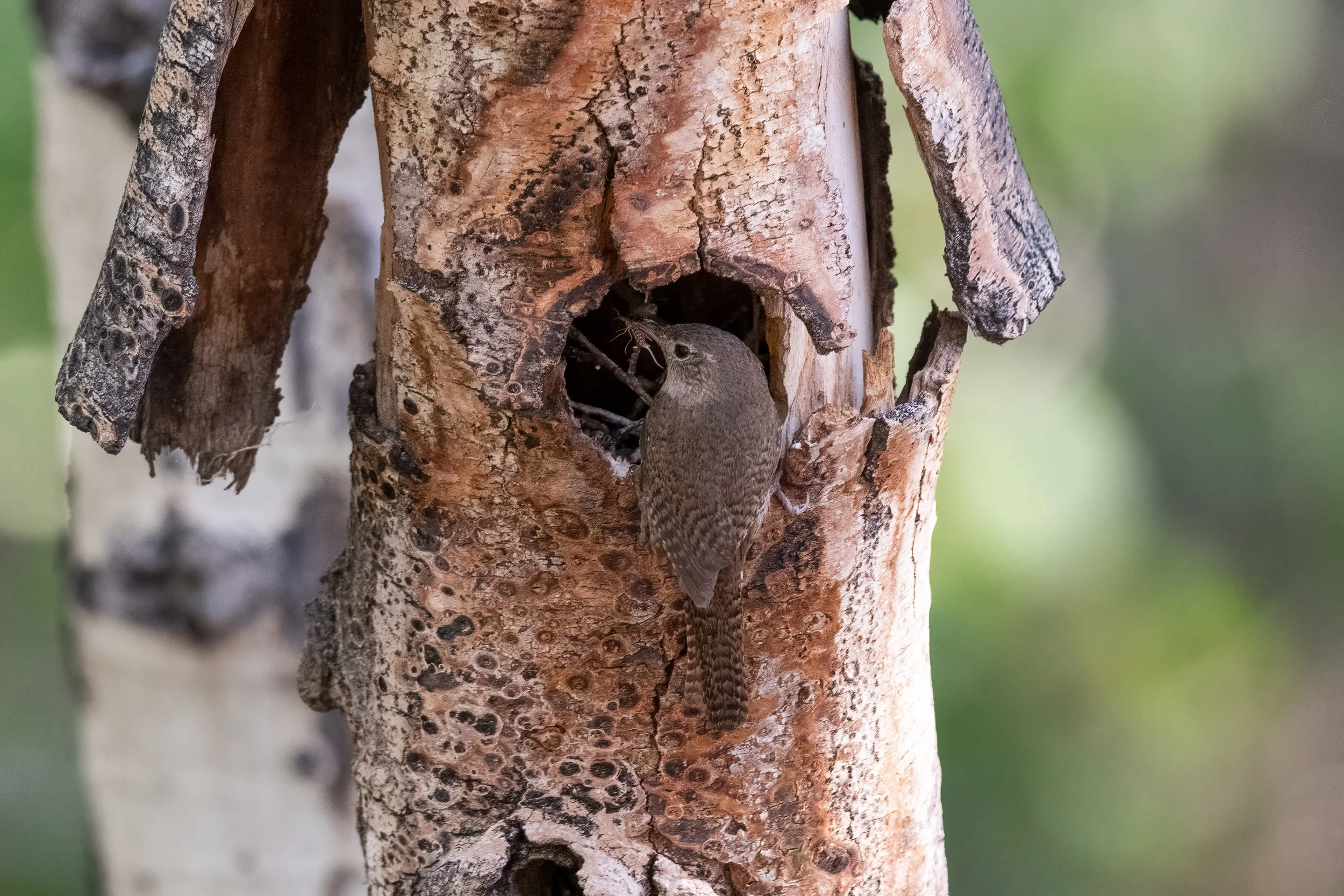
This Northern House Wren was seen carrying food…but without young birds seen or heard in the tree cavity, this falls short of “confirmed” breeding. Photo: Forrest English.
Confirmed Species So Far
Mono: 150 species breeding species confirmed
Inyo: 137 species breeding species confirmed
Blocks with confirmed species is similar to effort, but can be more easily affected by specific habitats, or skilled observers. Again, the Bishop NE block leads with 35 confirmed breeding species (170 total species observed). Following in 2nd place is Lundy SE with 33 confirmed breeding species (134 observed). Tied for 3rd place, Fish Slough SW (Owens River below Pleasant Valley Reservoir and Millpond) with 29 confirmed breeding species (96 observed) and Fish Slough SE also with 29 confirmed breeding species (151 observed). And tied in 4th place, Crystal Crag NE (Twin Lakes and Lake Mary) with 28 confirmed breeding species (83 observed) and Lee Vining CE (South Tufa, Rush Creek Delta) with 28 confirmed breeding species (118 observed).
Join the project!
Resources to get you started observing and documenting breeding bird activity can be found on the California Bird Atlas eBird page, as well as via bird walks and trainings through the Eastern Sierra Bird Alliance.
Head to this page for some easy steps you can take to get involved.
The Eastern Sierra Bird Alliance is a community chapter of the National Audubon Society, representing the diverse habitats of the Eastern Sierra within Inyo and Mono Counties.
Our mission is to educate the public about local bird species and habitats; while working to preserve and protect them for future generations.
